The Wobbly Chair Leg: Find the Loose Joint First
A wobbly chair leg often points to a loose joint, but careful inspection can distinguish a simple fit issue from damage that needs a different repair.
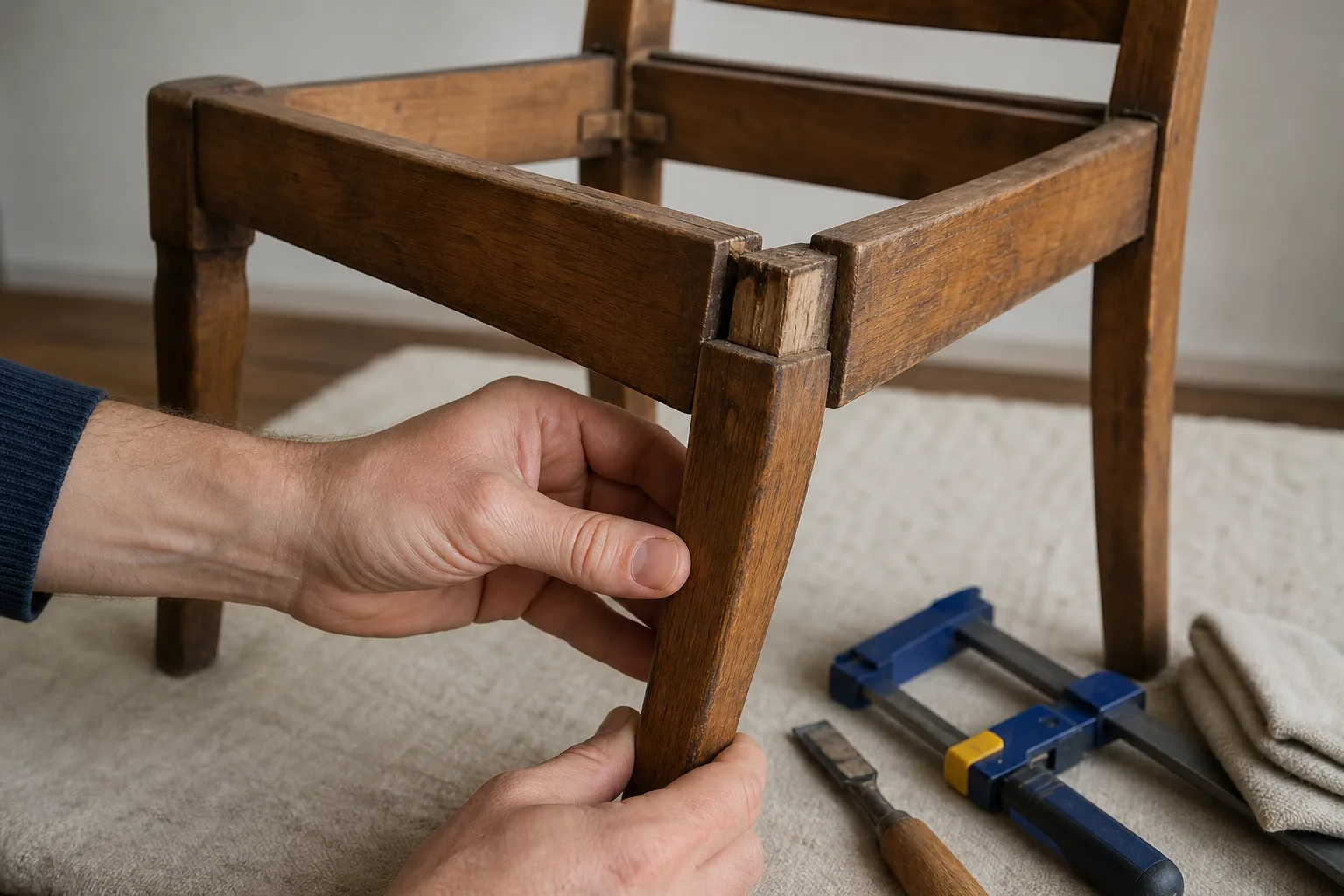
A wobbly chair leg usually points to a loose joint, not a leg that needs more force. To inspect a wobbly chair leg, work out which connection moves before reaching for glue or a clamp; otherwise, a simple repair can become a larger one.
Start with a stable chair and a clear view
Imagine you have a wooden dining chair that rocks when someone shifts in it. One front leg seems to move, though the chair’s apron—the horizontal rail beneath the seat—may be moving with it. The aim is to identify the moving parts, not to make the chair seem steady for a moment.
Put the chair on a firm, level floor and remove any cushion. Check that a loose floorboard or uneven tile is not creating the wobble. Then press each leg gently, one at a time, while watching the joints where the legs meet the seat rails. A helper can watch the opposite side, but a phone recording close-up can also make small movement easier to see.
Do not sit on the chair to test it. A joint that is already separating may give way under body weight, and the floor is an unhelpful place to learn that.
Trace the movement to its source
In this imagined case, the front-left leg shifts slightly where it meets the side rail. The rail stays still at its other end, and the seat does not flex. That pattern points towards the leg-to-rail joint rather than a loose seat, a damaged rail or a problem at the foot.
Look for a visible gap, fresh pale wood where surfaces have rubbed, old glue squeezed out, or a hairline crack running from the joint. These clues are more useful than the sound alone. A creak can come from friction between parts that remain joined; a visible opening or independent movement is stronger evidence of a loose connection.
Inspect the whole chair before deciding. Check the other leg joints, the rails, corner blocks beneath the seat, and any screws or bolts. A joint can look intact from one angle while a rail has split behind it. If the chair has a metal bracket, inspect the bracket and its fixing points too, rather than assuming the wooden joint is responsible.
Separate a loose fit from damaged wood
A basic fit issue is plausible when the joint has opened cleanly but the surrounding wood remains solid. A tenon—the shaped end of a rail or leg—may have loosened inside its matching mortise, or an old adhesive bond may have failed. The parts should still meet in their intended positions without being forced sideways.
Damage calls for more caution. Stop if you see a split through a rail, crushed fibres, a missing piece of wood, a badly enlarged hole, or a joint that shifts in several directions. Those signs suggest that simply adding adhesive may leave the underlying problem untouched. A cracked structural part may need a fitted repair or replacement, and a chair that carries regular weight deserves sound joinery rather than a cosmetic patch.
Also note whether the joint is held by screws, bolts, dowels or a wedged tenon. Each construction changes the sensible repair. Do not drill a new hole or drive in a larger screw merely because a visible fastener seems loose; it may be pulling against damaged wood or fixing the wrong symptom.
Use a gentle dry fit before choosing adhesive
For the invented chair, you decide to see whether the leg and rail can return to their original positions without force. With the chair turned carefully onto a padded surface, you support the rail and ease the joint only enough to inspect it. It opens slightly, but the tenon is not visibly split and the mortise edges appear intact.
That is consistent with a failed glue bond, though it is not proof that glue alone will solve every cause. If the parts cannot be separated without levering hard, stop. Prying can tear out sound fibres and turn a repairable joint into damaged joinery. A professional furniture restorer or experienced woodworker is the sensible next call when the structure is unclear or the chair is valuable.
If a joint does come apart cleanly and the wood is sound, remove loose old adhesive with a scraper or chisel used carefully. Avoid gouging the mating surfaces. A dry fit should bring the parts together in their original alignment; if they rock, leave a conspicuous gap or need strong pressure, the fit needs attention before adhesive is applied.
What should you check before repairing it?
Can I tighten a chair joint with a screw?
Only if the chair was designed for that fastener and the surrounding wood can hold it. A new screw driven into a split or enlarged hole may worsen the damage rather than secure the joint.
Should I use wood glue on a loose chair leg?
Wood glue may suit a clean, close-fitting joint with sound wood, but it cannot restore missing material or repair a cracked rail by itself. Follow the adhesive maker’s directions and confirm that the joint can be clamped in alignment.
How can I tell if the chair is safe to use?
If a leg or rail still moves, a crack is visible, or the chair’s construction is uncertain, keep it out of use until the defect is repaired. A qualified furniture repairer can assess structural damage that is not obvious from a surface inspection.
What if the chair still wobbles after the joint is fixed?
Check that the chair stands on a level surface and that its legs are not uneven or damaged. If it rocks on a flat floor despite firm joints, the issue may be geometry or a distorted frame rather than a loose connection.
Clamp the joint in its original alignment
In the hypothetical repair, the joint fits closely when dry and the chair’s frame remains square. You apply adhesive suitable for the joint, bring the pieces together, and use a padded clamp to hold them in alignment according to the product instructions. A clamp should keep the surfaces seated, not bend the frame into a new shape. Wipe away squeeze-out as directed by the adhesive maker, then leave the chair undisturbed for the stated curing period.
If the joint needs a complicated clamp arrangement, has no stable surface for clamping, or pulls the chair out of square, pause rather than improvising with excessive pressure. The repair should restore the original geometry. A woodworking professional can make or fit a replacement part when the joint no longer closes properly.
After the adhesive has fully cured, inspect the joint and press gently against the leg while the chair remains supported. Do not return it to normal use if there is movement, a fresh gap or a new crack. The invented chair in this walk-through is ready only after the joint stays aligned and the frame sits steadily on the floor.
Let the joint, not the wobble, guide the repair
The useful lesson from this wobbly chair leg is to follow movement back to its source. A cleanly opened joint with sound wood may suit a straightforward repair; cracks, crushed fibres, missing material or uncertain construction call for a different level of work. The phrase “wobbly chair leg” describes the symptom, not the diagnosis.
Before choosing a fix, identify what moves, inspect the surrounding structure, and check whether the parts meet naturally. If anything still shifts after repair, keep the chair out of service and get the joint assessed. A few minutes spent watching the connection can spare the chair a very enthusiastic but poorly placed screw.